AA

화면 캡처 2026-08-10 081613.jpg


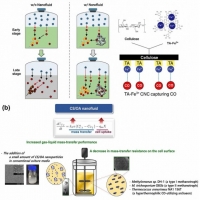
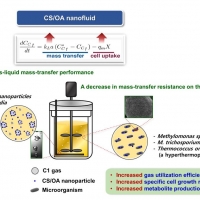
Background: Methane (CH4) is an attractive carbon feedstock for sustainable biomanufacturing, but poor CH4 solubility and gas-liquid mass-transfer limitations continue to constrain methanotroph-based CH4 valorization. Here, we evaluated biocompatible bionanofluids as additive-based process intensification tools and examined whether two operationally distinct bionanofluid application strategies produce distinct time-dependent physiological responses beyond simple growth enhancement.
Results: Two bionanofluids, chitosan/oleamide (CS/OA) nanoparticles and tannic acid–Fe3+ complex-coated cellulose nanocrystals (TA-Fe3+CNCs), were evaluated in 5-L cultures of Methylosinus trichosporium OB3b using two different application approaches: CS/OA seed adaptation followed by cultivation in conventional medium, and TA-Fe3+CNCs supplementation in the main culture. In both approaches, time-resolved profiling of gas uptake, nitrogen species, extracellular metabolites, and poly(3-hydroxybutyrate) (PHB) showed higher CH4 and O2 utilization, with 1.5–1.6- and 2.0–2.1-fold increases in specific CH4 and O2 uptake rates, respectively, and faster growth, with 1.3–1.5-fold higher µmax, than in the conventional control. These changes were accompanied by consistently lower PHB content, faster nitrate depletion, higher ammonium accumulation, and distinct extracellular metabolite patterns. Notably, CS/OA seed adaptation was associated with transient succinate accumulation during exponential growth, whereas TA-Fe3+CNCs supplementation led to faster methanol accumulation without succinate release. These observations are consistent with a process-level response in which higher CH4/O2 uptake and faster growth coincided with lower PHB content under the tested conditions. As an initial proof-of-concept experiment, a consecutive strategy combining CS/OA seed adaptation with TA-Fe3+CNCs supplementation in Methylomonas sp. DH-1 was associated with greater transient succinate accumulation and a higher peak succinate titer than under the conventional condition.
Conclusions: Comparative time-resolved profiling of two different bionanofluid approaches indicated that bionanofluid application was associated with higher CH4/O2 uptake, faster growth, lower PHB accumulation, and distinct time-dependent metabolite patterns under the tested conditions. These findings support the use of biocompatible bionanofluids as practical media additives that can be applied without major bioreactor redesign and can motivate future component-controlled testing of sequential strategies for growth-linked CH4 bioconversion.

70. E. Kang et al., "Bionanofluids enhance methane bioconversion and reshape time-resolved methanotroph physiology", J. Biol. Eng. (2026) in press

Background: Methane (CH4) is an attractive carbon feedstock for sustainable biomanufacturing, but poor CH4 solubility and gas-liquid mass-transfer limitations continue to constrain methanotroph-based C...

69. E. Kang, Y. S. Choi, "Recent Advances on Enhancing Mass Transfer Efficiency in C1-Gas Bioconversion Processes", Korean Chem. Eng. Res. (2025) 63:285-296

Microbial bioconversion of C1-gases, such as methane and carbon monoxide, is a promising approach for sustainable carbon utilization but faces challenges due to poor gas solubility and mass-transfer li...

68. S.H. Lee, E. Kang, ... "Archaeal Tyrosinase as a Versatile Biocatalyst for Lignin-derived Aromatic Compounds Valorization", International Journal of Biological Macromolecules, (2025) 316:144669

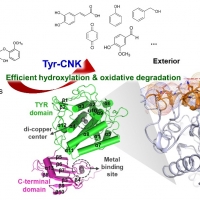
Biomass-derived aromatic compounds, including those obtained from lignin (which is the most abundant aromatic biopolymer on Earth), are valuable for sustainable chemical production. Various lignin-degr...

67. D.Jeong, H. Choi, ...... "Coacervate formation of hBMP-2 fused with an ECM with HA", Biotechnology Bioprocess Eng. (2025) 30:455-463

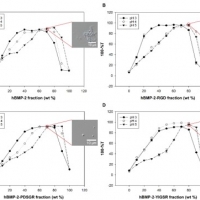
Human bone morphogenetic protein-2 (hBMP-2) is a growth factor extensively used to promote bone regeneration. Nonetheless, challenges such as initial burst release, low solubility and aggregation under...

66. D.N. Kim, E. Kang, ...... "Molecular regime shift from kinetic limitation condition to mass-transfer limitation condition for stabilizing CO metabolism by microorganisms", Chemical Engineering Journal, 504:158801 (2025)

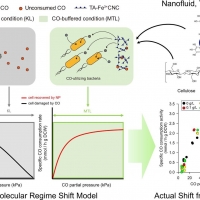
Carbon monoxide (CO) serves as a promising carbon source, but it adversely affects CO-metabolizing microorganisms. To address this issue, fermentation should occur under mass-transfer limitation condit...

65. G. Bae, J. Lee, H. Kim, Y.J. Yeon, Y.S. Choi, "Tyrosinase from Citreicella sp. as an organophilic enzyme for catechol biosynthesis", Biochemical Engineering Journal 201:109123 (2024)

Tyrosinases can directly catalyze the biosynthesis of catechol compounds without additional cofactors under mild conditions. However, the low stability of tyrosinases in organic media has limited their...

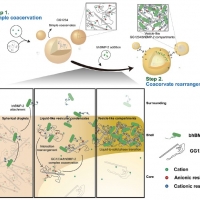
64. H. Choi, Y. Hong, S. Najafi, S.Y. Kim, J.-E. Shea, D.S. Hwang, Y.S. Choi, "Spontaneous transition of spherical coacervate to vesicle-like compartment", Advanced Science, 11:2305978 (2024)

Numerous biological systems contain vesicle-like biomolecular compartments without membranes, which contribute to diverse functions including gene regulation, stress response, signaling, and skin barri...

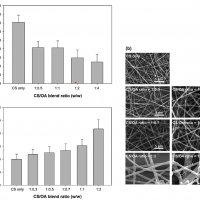
63. E. Moon, E. Kang, W. Song, B.J. Kim, H.J. Cha, Y.S. Choi, "Chitosan/oleamide electrospun nanofiber with enhanced spinnabiity and moderate hydrophobicity", KJChE 40:405-411 (2023)

Chitosan-based nanofibers have become attractive biomaterials for wound healing and dressing applications based on their intrinsic biocompatibility, biodegradability, and antibacterial properties. Howe...

62. E. Kang, E. Moon, W. Song, L.H. Kim, J.S. Hyung, J.-H. Jo, J.-H. Park, M.-S. Kim, J.-G. Na, Y.S. Choi, “Chitosan/oleamide nanofluid as a significant medium for enhancing gas utilization ......”, Chemical Engineering Journal, 433:133846 (2022)

Microbial biotransformation of C1 gas feedstocks such as CH4 and CO is a notable technique for sustainable, carbon–neutral chemical and fuel production. However, low C1-gas utilization efficiency in bi...

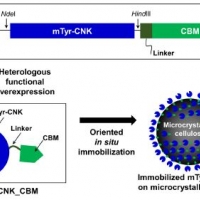
61. S. Kim, G. Bae, M. Shin, E. Kang, T.Y. Park, Y.S. Choi, H.J. Cha, “Oriented in situ immobilization of a functional tyrosinase on microcrystalline cellulose ......”, Biotechnololy Journal, 16:2100216, (2021)

Background: Catechol-containing polymers such as mussel adhesive proteins (MAPs) are attractive as biocompatible adhesive biomaterials, and the catecholic amino acid 3,4-dihydroxyphenyl-L-alanine (DOPA...

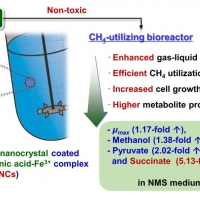
60. E. Kang, H.H. Je, E. Moon, J.-G. Na, M.S. Kim, D.S. Hwang, Y. S. Choi, “Cellulose nanocrystals coated with a tannic acid-Fe3+ complex as a significant medium for efficient CH4 microbial biotransformation”, Carbohydrate Polymers 258:117733, (2021)

Microbial biotransformation of CH4 gas has been attractive for the production of energy and high-value chemicals. However, insufficient supply of CH4 in a culture medium needs to be overcome for the ef...

59. Sujin Lim, Dawoon Jeong, Mi-Ran Ki, Seung Pil Pack, and Yoo Seong Choi, “Tyrosinase-mediated rapid and permanent chitosan/gelatin and chitosan/gelatin/nanohydroxyapatite hydrogel”, Korean J. Chem. Eng. 38:98-103 (2021)

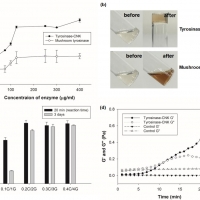
Chitosan/gelatin and chitosan/gelatin/nanohydroxyapatite hydrogels were rapidly and stably prepared without any crosslinking materials by using an engineered tyrosinase (mTyr-CNK) with high catalytic a...

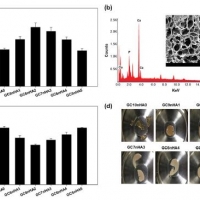
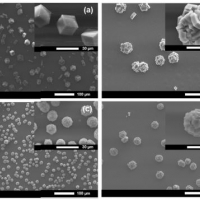
58. Chaeyeon Son, Wooho Song, Hyunsuk Choi, Yoo Seong Choi, “In vitro CaCO3 crystallization at room temperature and atmospheric pressure using recombinant proteins GRP_BA and GG1234”, Korean Chem. Eng. Res. 57:205-209, (2019)

The exquisite structure and attractive biological properties of biominerals have great potential and increased interest for use in a wide range of medical and industrial applications. Calcium carbonate...

57. Eun Hae Kim, Sujin Lim, Tae Eun Kim, In Oh Jeon, Yoo Seong Choi "Preparation of in situ injectable chitosan/gelatin hydrogel using an acid-tolerant tyrosinase," Biotechnology and Bioprocess Engineering 23:500-506 (2018)

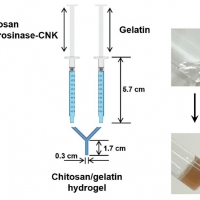
An in situ injectable chitosan/gelatin hydrogel was formed under slightly acidic conditions (pH 4.0 ~ 4.5) using an acid-tolerant tyrosinase, tyrosinase-CNK. A homogeneous chitosan/tyrosinase-CNK solut...

56. Yun Jung Yang, Yoo Seong Choi, Hyung Joon Cha "Bioinspired load-bearing hydrogel based on engineered sea anemone skin-derived collagen-like protein", Biotechnology Journal 1800086 (2018)

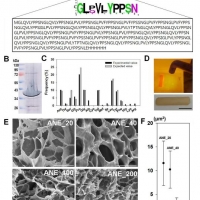
With the help of recombinant DNA technology, many protein candidates have been investigated and engineered for biomaterial applications. Particularly, several repeat sequences with unique secondary str...

55. Eungsu Kang, Sun Young Kim, Yoo Seong Choi "Structural and functional properties of tyrosinases as a type-3 copper enzyme", KSBB Journal, 33:63-69 (2018)

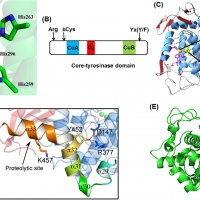
Tyrosinases, as a representative type-3 copper enzyme (two copper ions in the active site), catalyze the orthohydroxylation of monophenols and the oxidation of diphenols. It is ubiquitously distributed...

54. Yoo Rae Choi, Eun Hae Kim, Sujin Lim, Yoo Seong Choi "Efficient preparation of a permanent chitosan/gelatin hydrogel using an acid-tolerant tyrosinase", Biochemical Engineering Journal, 129:50-56 (2018).

An acid-tolerant tyrosinase, tyrosinase-CNK, was used to form chitosan/gelatin hydrogels without any additional crosslinking materials at pH 4, where appropriate chitosan/gelatin blends were efficientl...

53. Hyunsu Do, Eungsu Kang, Byeongseon Yang, Hyung Joon Cha, Yoo Seong Choi "A tyrosinase, mTyr-CNK, that is functionally available as a monophenol monooxygenase", Scientific Reports, 7:17267 (2017).

Tyrosinase efficiently catalyzes the ortho-hydroxylation of monophenols and the oxidation of diphenols without any additional cofactors. Although it is of significant interest for the biosynthesis of c...

52. So Yeong Bahn, Byung Hoon Jo, Yoo Seong Choi, Hyung Joon Cha "Control of nacre biomineralization by Pif80 in pearl oyster", Science Advances, 3:e1700765 (2017). 

Molluscan nacre is a fascinating biomineral consisting of a highly organized calcium carbonate composite that provides unique fracture toughness and an iridescent color. Organisms elaborately control t...

51. Chaeyeon Son, Sun Young Kim, So Yeong Bahn, Hyung Joon Cha, Yoo Seong Choi "CaCO3 thin-film formation mediated by a synthetic protein-lysozyme coacervate", RSC Advances, 7:15302-15308 (2017).

Coacervation is a liquid-liquid phase separation process of macromolecular polyelectrolytes. The formation of simple and complex coacervations of a synthetic acidic protein, GG1234, as a model shell ma...


34134 대전광역시 유성구 대학로 99 충남대학교 공과대학 응용화학공학과 생체분자공학연구실 (공과대학 1호관 155호) | TEL : (042)821-5682 | E-Mail : biochoi@cnu.ac.kr

Copyright 2017. Biomolecular Engineering Lab. All Right Reserved.

서버에 요청 중입니다. 잠시만 기다려 주십시오...